-
Computer Talk
Provided to YouTube by Too Lost LLC
Computer Talk · austenyo
Minialbum
℗ yo recordings
Released on: 2019-09-18
Composer: austenyo
Composer: Austin P Scheer
Auto-generated by YouTube.
published: 19 Jan 2023
-
''Computer Talk'' by 1374 (3 Coins) | Geometry Dash [2.11]
It's been a while since we've seen a level by 1374, last time we saw him was when Against the God was released, which was one of my favorite levels when it came out, Computer Talk is a lot different, but that doesn't mean in any way that it's not a good level. Having a retro style to it, a green theme like old computers used to have, it's very nicely executed, the animations for both the block designs and objects and "enemies" in the back, the effects and sync with the song are done really well. The stickman section at 0:49 is infact 2-player, it isn't mentioned in the level, but I assume 1374 will clarify that. Overall this is a nicely done level with a solid theme and great decoration to back it up.
Music:
Computer Talk by FWLR
Support the artist:
Soundcloud: https://t.co/XnEuNRBuvE
Band...
published: 02 Apr 2020
-
"Computer Talk" by 1374 (me!)
Finally, my new solo level is here!
Basically it's computer themed level, and it's green all over!
Hope you guys enjoy this one!
Level info
ID : 60621991
song : Computer Talk by FWLRmusic
link : http://www.newgrounds.com/audio/listen/780692
btw, here's my discord server
https://discord.gg/5EeqMuk
published: 02 Apr 2020
-
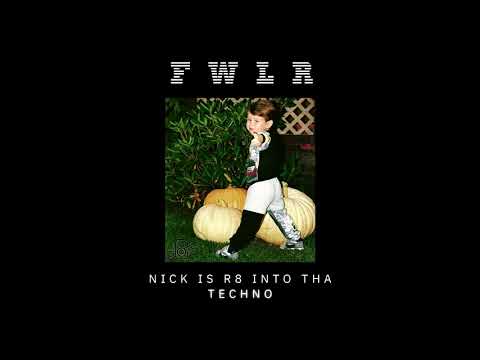
FWLR - Computer Talk [Nick Is R8 Into Tha Techno EP]
Computer Talk
[Nick Is R8 Into Tha Techno EP]
FREE Download: http://www.FWLRmusic.bandcamp.com
Soundcloud: http://www.soundcloud.com/FWLRmusic
Facebook: http://www.facebook.com/FWLRmusic
Twitter: http://www.twitter.com/FWLRmusic
YouTube: http://www.youtube.com/FWLRmusic
Instagram: http://www.Instagram.com/FWLRmusic
Snapchat: FWLRmusic
published: 22 Dec 2017
-
Computer Talk | Project Arrhythmia | SS rank | level by Blane | song by Fwlr
level: https://steamcommunity.com/sharedfiles/filedetails/?id=2562761047&searchtext=
song: https://www.youtube.com/watch?v=6aWc_ZPvs9g
Blane: https://www.youtube.com/channel/UCWj-NKwu5eH10r1NfWr_4Jg
Project Arrhythmia in steam: https://store.steampowered.com/app/44...
------------------------------------------------------------------------------------------------
Наш сервер Discord https://discord.gg/Q48nbkY
------------------------------------------------------------------------------------------------
Группа ВК https://vk.com/public188813160
------------------------------------------------------------------------------------------------
Группа ВК по аритмии https://vk.com/projectarrhythmiarus
-----------------------------------------------------------------------------------------------...
published: 09 Aug 2021
-
34C3 - The Ultimate Apollo Guidance Computer Talk
https://media.ccc.de/v/34c3-9064-the_ultimate_apollo_guidance_computer_talk
The Apollo Guidance Computer ("AGC") was used onboard the Apollo spacecraft to support the Apollo moon landings between 1969 and 1972. This talk explains "everything about the AGC", including its quirky but clever hardware design, its revolutionary OS, and how its software allowed humans to reach and explore the moon.
Michael Steil
Christian Hessmann
https://fahrplan.events.ccc.de/congress/2017/Fahrplan/events/9064.html
published: 28 Dec 2017
-
Geometry Dash: "Computer Talk Old" by 1374 (Harder)
All levels by 1374: https://www.youtube.com/playlist?list=PLM70VIMww-s2KOZ4bWU8iS1d7s0uaq53M
Total Attempts: 91
My Rating: Harder
published: 26 Mar 2023
-
Lyric Video: Austenyo "Computer Talk"
Morgan's awesome very detailed lyric video that he spent hours and hours on and it shows! Check out the layers of text perfectly timed!
published: 21 Jun 2023
-
serial experiments lain - computer talk amv
OH BOY
published: 17 Dec 2020
-
comp talks
comp talks
published: 05 May 2011
2:14
Computer Talk
Provided to YouTube by Too Lost LLC
Computer Talk · austenyo
Minialbum
℗ yo recordings
Released on: 2019-09-18
Composer: austenyo
Composer: Austin P Scheer...
Provided to YouTube by Too Lost LLC
Computer Talk · austenyo
Minialbum
℗ yo recordings
Released on: 2019-09-18
Composer: austenyo
Composer: Austin P Scheer
Auto-generated by YouTube.
https://wn.com/Computer_Talk
Provided to YouTube by Too Lost LLC
Computer Talk · austenyo
Minialbum
℗ yo recordings
Released on: 2019-09-18
Composer: austenyo
Composer: Austin P Scheer
Auto-generated by YouTube.
- published: 19 Jan 2023
- views: 183112
1:45
''Computer Talk'' by 1374 (3 Coins) | Geometry Dash [2.11]
It's been a while since we've seen a level by 1374, last time we saw him was when Against the God was released, which was one of my favorite levels when it came...
It's been a while since we've seen a level by 1374, last time we saw him was when Against the God was released, which was one of my favorite levels when it came out, Computer Talk is a lot different, but that doesn't mean in any way that it's not a good level. Having a retro style to it, a green theme like old computers used to have, it's very nicely executed, the animations for both the block designs and objects and "enemies" in the back, the effects and sync with the song are done really well. The stickman section at 0:49 is infact 2-player, it isn't mentioned in the level, but I assume 1374 will clarify that. Overall this is a nicely done level with a solid theme and great decoration to back it up.
Music:
Computer Talk by FWLR
Support the artist:
Soundcloud: https://t.co/XnEuNRBuvE
Bandcamp: https://t.co/lcRXjwQWeU
Facebook: https://t.co/KwL9Q8Hgr4
Twitter: https://t.co/cHmspf7U2B
YouTube: https://t.co/4NdeUZhkHm
Instagram: https://t.co/ZWtRsIZqID
Spotify: https://t.co/zmEIrvjaNH
Discord: https://t.co/NVd3XxleoR
Snapchat: FWLRmusic
https://wn.com/''Computer_Talk''_By_1374_(3_Coins)_|_Geometry_Dash_2.11
It's been a while since we've seen a level by 1374, last time we saw him was when Against the God was released, which was one of my favorite levels when it came out, Computer Talk is a lot different, but that doesn't mean in any way that it's not a good level. Having a retro style to it, a green theme like old computers used to have, it's very nicely executed, the animations for both the block designs and objects and "enemies" in the back, the effects and sync with the song are done really well. The stickman section at 0:49 is infact 2-player, it isn't mentioned in the level, but I assume 1374 will clarify that. Overall this is a nicely done level with a solid theme and great decoration to back it up.
Music:
Computer Talk by FWLR
Support the artist:
Soundcloud: https://t.co/XnEuNRBuvE
Bandcamp: https://t.co/lcRXjwQWeU
Facebook: https://t.co/KwL9Q8Hgr4
Twitter: https://t.co/cHmspf7U2B
YouTube: https://t.co/4NdeUZhkHm
Instagram: https://t.co/ZWtRsIZqID
Spotify: https://t.co/zmEIrvjaNH
Discord: https://t.co/NVd3XxleoR
Snapchat: FWLRmusic
- published: 02 Apr 2020
- views: 1357251
1:30
"Computer Talk" by 1374 (me!)
Finally, my new solo level is here!
Basically it's computer themed level, and it's green all over!
Hope you guys enjoy this one!
Level info
ID : 60621991
son...
Finally, my new solo level is here!
Basically it's computer themed level, and it's green all over!
Hope you guys enjoy this one!
Level info
ID : 60621991
song : Computer Talk by FWLRmusic
link : http://www.newgrounds.com/audio/listen/780692
btw, here's my discord server
https://discord.gg/5EeqMuk
https://wn.com/Computer_Talk_By_1374_(Me_)
Finally, my new solo level is here!
Basically it's computer themed level, and it's green all over!
Hope you guys enjoy this one!
Level info
ID : 60621991
song : Computer Talk by FWLRmusic
link : http://www.newgrounds.com/audio/listen/780692
btw, here's my discord server
https://discord.gg/5EeqMuk
- published: 02 Apr 2020
- views: 52583
3:02
FWLR - Computer Talk [Nick Is R8 Into Tha Techno EP]
Computer Talk
[Nick Is R8 Into Tha Techno EP]
FREE Download: http://www.FWLRmusic.bandcamp.com
Soundcloud: http://www.soundcloud.com/FWLRmusic
Facebook: http:/...
Computer Talk
[Nick Is R8 Into Tha Techno EP]
FREE Download: http://www.FWLRmusic.bandcamp.com
Soundcloud: http://www.soundcloud.com/FWLRmusic
Facebook: http://www.facebook.com/FWLRmusic
Twitter: http://www.twitter.com/FWLRmusic
YouTube: http://www.youtube.com/FWLRmusic
Instagram: http://www.Instagram.com/FWLRmusic
Snapchat: FWLRmusic
https://wn.com/Fwlr_Computer_Talk_Nick_Is_R8_Into_Tha_Techno_Ep
Computer Talk
[Nick Is R8 Into Tha Techno EP]
FREE Download: http://www.FWLRmusic.bandcamp.com
Soundcloud: http://www.soundcloud.com/FWLRmusic
Facebook: http://www.facebook.com/FWLRmusic
Twitter: http://www.twitter.com/FWLRmusic
YouTube: http://www.youtube.com/FWLRmusic
Instagram: http://www.Instagram.com/FWLRmusic
Snapchat: FWLRmusic
- published: 22 Dec 2017
- views: 63670
3:26
Computer Talk | Project Arrhythmia | SS rank | level by Blane | song by Fwlr
level: https://steamcommunity.com/sharedfiles/filedetails/?id=2562761047&searchtext=
song: https://www.youtube.com/watch?v=6aWc_ZPvs9g
Blane: https://www.youtub...
level: https://steamcommunity.com/sharedfiles/filedetails/?id=2562761047&searchtext=
song: https://www.youtube.com/watch?v=6aWc_ZPvs9g
Blane: https://www.youtube.com/channel/UCWj-NKwu5eH10r1NfWr_4Jg
Project Arrhythmia in steam: https://store.steampowered.com/app/44...
------------------------------------------------------------------------------------------------
Наш сервер Discord https://discord.gg/Q48nbkY
------------------------------------------------------------------------------------------------
Группа ВК https://vk.com/public188813160
------------------------------------------------------------------------------------------------
Группа ВК по аритмии https://vk.com/projectarrhythmiarus
------------------------------------------------------------------------------------------------
Русский дискорд сервер по этой игре: https://discord.gg/zTyVfjU
https://wn.com/Computer_Talk_|_Project_Arrhythmia_|_Ss_Rank_|_Level_By_Blane_|_Song_By_Fwlr
level: https://steamcommunity.com/sharedfiles/filedetails/?id=2562761047&searchtext=
song: https://www.youtube.com/watch?v=6aWc_ZPvs9g
Blane: https://www.youtube.com/channel/UCWj-NKwu5eH10r1NfWr_4Jg
Project Arrhythmia in steam: https://store.steampowered.com/app/44...
------------------------------------------------------------------------------------------------
Наш сервер Discord https://discord.gg/Q48nbkY
------------------------------------------------------------------------------------------------
Группа ВК https://vk.com/public188813160
------------------------------------------------------------------------------------------------
Группа ВК по аритмии https://vk.com/projectarrhythmiarus
------------------------------------------------------------------------------------------------
Русский дискорд сервер по этой игре: https://discord.gg/zTyVfjU
- published: 09 Aug 2021
- views: 57545
1:01:42
34C3 - The Ultimate Apollo Guidance Computer Talk
https://media.ccc.de/v/34c3-9064-the_ultimate_apollo_guidance_computer_talk
The Apollo Guidance Computer ("AGC") was used onboard the Apollo spacec...
https://media.ccc.de/v/34c3-9064-the_ultimate_apollo_guidance_computer_talk
The Apollo Guidance Computer ("AGC") was used onboard the Apollo spacecraft to support the Apollo moon landings between 1969 and 1972. This talk explains "everything about the AGC", including its quirky but clever hardware design, its revolutionary OS, and how its software allowed humans to reach and explore the moon.
Michael Steil
Christian Hessmann
https://fahrplan.events.ccc.de/congress/2017/Fahrplan/events/9064.html
https://wn.com/34C3_The_Ultimate_Apollo_Guidance_Computer_Talk
https://media.ccc.de/v/34c3-9064-the_ultimate_apollo_guidance_computer_talk
The Apollo Guidance Computer ("AGC") was used onboard the Apollo spacecraft to support the Apollo moon landings between 1969 and 1972. This talk explains "everything about the AGC", including its quirky but clever hardware design, its revolutionary OS, and how its software allowed humans to reach and explore the moon.
Michael Steil
Christian Hessmann
https://fahrplan.events.ccc.de/congress/2017/Fahrplan/events/9064.html
- published: 28 Dec 2017
- views: 284715
1:26
Geometry Dash: "Computer Talk Old" by 1374 (Harder)
All levels by 1374: https://www.youtube.com/playlist?list=PLM70VIMww-s2KOZ4bWU8iS1d7s0uaq53M
Total Attempts: 91
My Rating: Harder
All levels by 1374: https://www.youtube.com/playlist?list=PLM70VIMww-s2KOZ4bWU8iS1d7s0uaq53M
Total Attempts: 91
My Rating: Harder
https://wn.com/Geometry_Dash_Computer_Talk_Old_By_1374_(Harder)
All levels by 1374: https://www.youtube.com/playlist?list=PLM70VIMww-s2KOZ4bWU8iS1d7s0uaq53M
Total Attempts: 91
My Rating: Harder
- published: 26 Mar 2023
- views: 16040
2:15
Lyric Video: Austenyo "Computer Talk"
Morgan's awesome very detailed lyric video that he spent hours and hours on and it shows! Check out the layers of text perfectly timed!
Morgan's awesome very detailed lyric video that he spent hours and hours on and it shows! Check out the layers of text perfectly timed!
https://wn.com/Lyric_Video_Austenyo_Computer_Talk
Morgan's awesome very detailed lyric video that he spent hours and hours on and it shows! Check out the layers of text perfectly timed!
- published: 21 Jun 2023
- views: 2302







 News Graphic
30 Jan 2024
News Graphic
30 Jan 2024
 News Graphic
30 Jan 2024
News Graphic
30 Jan 2024